
A few years ago, I realized that the difference between an ordinary and extraordinary leader was not talent, confidence or capability.
It was the word “extra.”
Extra resilience. Extra awareness. Extra willingness to face what most people avoid.
And the truth is — the only way we can do that extra is by building a rock-solid emotional foundation that allows us to adapt, pivot, and lead from presence, no matter what happens.
I’ve failed faster than most.
I’ve failed harder than most.
And I’ve learned that my success lives in my willingness to take more emotional risks — to meet my edges with curiosity, to seek feedback instead of validation, and to move through discomfort with speed and grace.
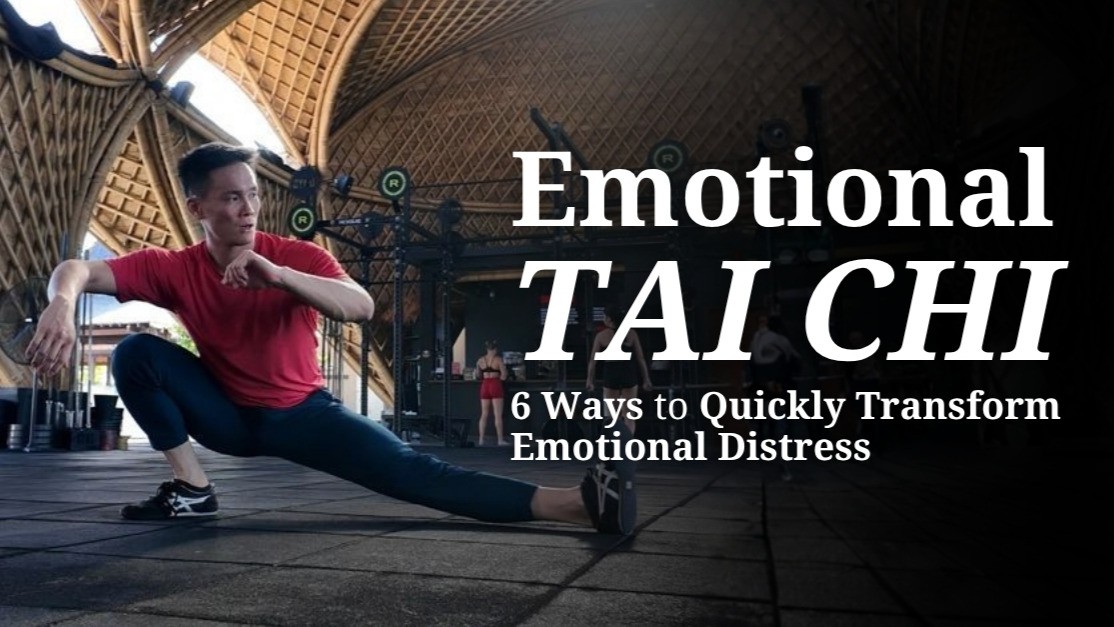
That’s what I call Emotional Tai Chi — the art of using emotional energy (even distress) as power, not resistance.
Here are 6 ways you can practice Emotional Tai Chi to become an extraordinary, emotionally agile leader 👇🏼
1️⃣ Poison: Self-Victimizing → Antidote: Radical Responsibility
When self-pity shows up, you have two choices:
Tell your sob story, or take your power back.
What happened may not be your fault, but it’s still your responsibility.
Eliminate words like “should,” “could,” “would,” “try,” “maybe,” and “can’t.”
Those are escape hatches that keep you from acting.
The moment you claim full responsibility for your reality, you stop being a victim of your story — and become the author of it.
💎 Ask yourself: “What’s one small step I can take right now to take radical responsibility of my situation and empower myself?”
2️⃣ Poison: Blame–Shame–Guilt → Antidote: Forgiveness
Blame and guilt are emotional quicksand and they keep you stuck in loops of resentment.
When you find yourself blaming others or shaming yourself, pause. There’s a hurt underneath that wants to be seen.
Forgiveness isn’t about letting others off the hook. It’s about freeing yourself from the pain their actions created.
Forgiveness is not weakness. Being able to do so quickly and effectively is the ultimate leadership strength.
You can be angry, sad, fearful, disappointed. The point here is that you don’t stay there and creatively discover a solution to move through your hurt.
💎 Ask yourself: “How am I in pain, and how can I love that pain for myself instead of making it about others?”
3️⃣ Poison: Complaining → Antidote: Gratitude
Complaining is a declaration of disempowerment.
Every time you complain, you reinforce the belief that life happens to you, not for you.
From a nervous system perspective, neurons that fire together wire together. When you repeatedly reinforce the same thoughts, that belief becomes your reality. Similarly, energy flows where attention goes. So be careful how you use the neuroplasticity of your brain.
Gratitude, on the other hand, expands your perception. It activates heart-coherence which establishes a communication between your heart and your brain.
This means it is opening your eyes to resources you already have where you are able to creatively turn problems into possibilities.
💎 Ask yourself: “What is the good here that I am not seeing?”
4️⃣ Poison: Judgment → Antidote: Compassionate Inquiry
You attract what you judge until you stop judging what you attract.
Judgment creates tunnel vision, blindspots, and if this is fueled by your self-righteousness, you are perpetuating and contributing to the problem.
Judgment keeps you rigid — stuck in a single perspective that once kept you safe.
Compassionate inquiry helps you soften. It invites curiosity over criticism and lets you see the truth beneath your reactions.
💎 Ask yourself: “Would I rather be right or would I rather be effective right now? What is a narrative that I am not considering here?”
5️⃣ Poison: Fear & Doubt → Antidote: Courage & Bias for Action
Here’s a truth that changed my life: You’ll never feel ready.
Preparation is not about having all the answers — it’s about being willing to take action before you do.
Courage doesn’t silence fear; it moves with it.
When fear shows up, don’t freeze move toward it, and get feedback to demystify the fear narrative in your head.
💎 Ask yourself: “How can I feel the fear and do it anyway? What’s the best that could happen right now?”
6️⃣ Poison: Addiction or Procrastination → Antidote: Self-Acceptance with Loving-Kindness
Addiction and procrastination are emotional painkillers — temporary relief that costs long-term peace.
The antidote isn’t more discipline. It’s compassion and to show up with devotion rather than more reward or punishment just to motivate yourself.
Meet yourself where you are, without judgment.
Regulate your nervous system.
Treat yourself with the same love you’d give someone you deeply care about.
Self-acceptance creates safety and that allows relaxation. Relaxation allows you to perform better which then allows you to cultivate the growth you are seeking.
💎 Ask yourself: “Can I show up 100% at my 1%, the same way I show up 100% at my 88%?”
🌊 Emotional Tai Chi is not about avoiding the hard stuff.
It is about moving with it.
When you practice these six antidotes, you stop resisting life and start dancing with it.
You stop reacting to stress and start transforming it into strength.
You stop needing to control every outcome — because you’ve learned how to trust yourself in any circumstance.
And that’s the essence of leadership — not control, but emotional agility.
Which of these six antidotes do you need most right now?
Write it down. Practice it today.
Because emotional mastery isn’t built in theory it’s built in the moments you choose to show up differently.
P.S. When you can do this for yourself, you can lead your team to do the same. Imagine what this could do for you and your organization. This is the work that I do with all my clients. And if you see a possibility here for you have a 45-minute conversation that is not a sales call.
Here’s what I promise: a “resilience” audit on how you lead your life, a personalized strategy to end destructive cycles of pain, fear, and stress while 5Xing your income and impact…
…and only if I know I can 100% help you, I’ll share what I can offer.